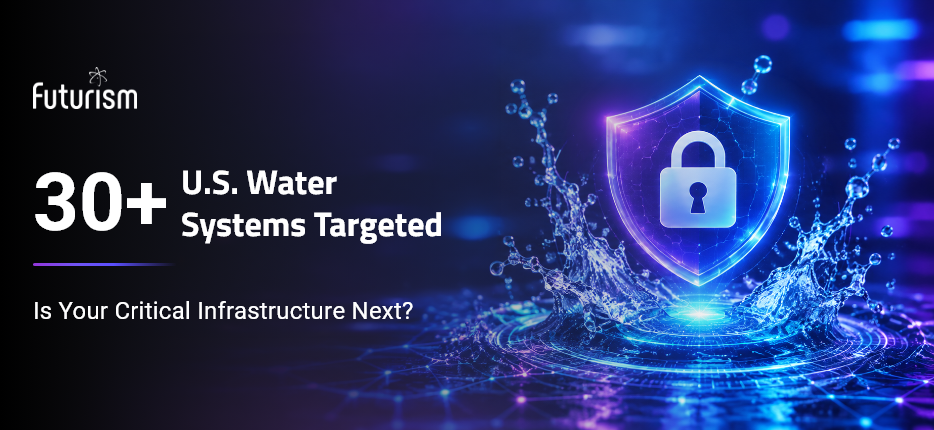
As Iran-linked cyber threat actors target municipal water infrastructure across multiple states, government agencies and utility operators face a critical question: Is their operational technology environment prepared for the next attack?
In Brief
The recent wave of cyberattacks targeting U.S. municipal water systems facilities is more than another cybersecurity headline. It is a warning sign for every government agency responsible for critical infrastructure.
Key Developments:
- More than 30 Minnesota water systems experienced coordinated cyberattacks between July 26 and July 27, 2026.
- Multiple utilities were forced to abandon automated operations and switch to manual processes.
- Nine Michigan water systems later reported related malicious activity.
- Federal agencies have attributed the attacks to Iran-affiliated threat actors targeting internet-connected industrial control systems.
- Officials have confirmed these attacks are part of an ongoing campaign against critical infrastructure.
Although no public health impacts have been reported, the implications are significant.
When attackers gain access to operational technology environments, the goal is no longer data theft. The target becomes the infrastructure itself.
What Makes These Attacks Different?
For years, cybersecurity conversations focused primarily on protecting networks, endpoints, and sensitive data. Today’s attackers are increasingly targeting the systems that keep communities running.
Water treatment facilities, power generation plants, transportation networks, and manufacturing operations rely on Operational Technology security systems that were never designed for today’s threat landscape. The recent incidents in Minnesota and Michigan highlight the troubling reality:
Attackers are actively attempting to manipulate the industrial systems responsible for delivering essential public services. More recently, two Colorado water utilities were targeted by foreign actors who changed OT equipment settings, disabled alarms and remote access, and modified pumping cycles, although no impact to water services or public safety was reported.
In several affected municipalities:
- Water plants temporarily lost automated functionality.
- Communications infrastructure was disrupted.
- Operators reverted to manual processes.
- Emergency declarations were issued to protect continuity of service.
While service interruptions remained limited, these events demonstrate how quickly operational disruption can become a public safety concern.
The Growing Threat to America’s Critical Infrastructure
Federal agencies including CISA, the FBI, EPA, NSA, Department of Energy, and U.S. Cyber Command have linked the activity to Iran-affiliated threat actors commonly tracked as CyberAv3ngers and Storm-0784.
According to federal advisories, these actors have been targeting:
- Internet-exposed PLCs
- SCADA environments
- Human-Machine Interfaces (HMIs)
- Industrial control systems supporting critical infrastructure
Their tactics include:
Manipulating Industrial Processes
Attackers can upload malicious project files that alter device behavior, disrupt automation, or interfere with industrial operations.
Locking Out Operators
By changing PLC passwords and modifying administrative controls, adversaries can prevent legitimate personnel from accessing critical systems.
Disrupting Visibility
Manipulated HMI displays create confusion during incident response, making it difficult for operators to distinguish legitimate system activity from malicious behavior.
For utility operators, this creates a dangerous scenario where decisions must be made without confidence in the integrity of operational data.
Why Water Utilities Remain a Prime Target
Many municipal utilities face a cybersecurity challenge that extends beyond technology. They are responsible for safeguarding critical public infrastructure while operating under budget constraints, limited staffing, and aging operational environments.
Common weaknesses:
Legacy Technology
Many OT security systems were deployed long before cybersecurity became a primary design consideration.
Internet-Accessible Industrial Assets
PLCs and remote access services frequently remain exposed to the internet for operational convenience.
Inadequate Network Segmentation
Poor separation between IT and OT networks allows attackers to move laterally once initial access is achieved.
Limited OT Security Monitoring
Many organizations simply do not have visibility into threats targeting industrial environments.
From an attacker’s perspective, these factors create the ideal opportunity to gain access, remain undetected, and eventually impact operations.
The Business and Public Safety Impact Government Leaders Must Consider
The most dangerous assumption is believing an attack has to cause physical
disruption before it becomes serious. The reality is far more concerning.
A successful compromise of a water utility can lead to:
- Service interruption
- Regulatory investigations
- Emergency response costs
- Loss of public trust
- Compliance violations
- Significant recovery expenses
- Long-term operational disruptions
For government leaders, the issue is no longer solely cybersecurity. It is risk management, public safety, operational resilience, and continuity of essential services.
Organizations should assume that determined adversaries are actively probing for weaknesses and build security strategies accordingly.
What Government and Utility Leaders Should Do Immediately
The federal advisory provides a clear warning, but organizations need practical actions. Based on the attack patterns observed across affected states, we recommend prioritizing the following initiatives:
Gain Complete Visibility of OT Assets
You cannot protect infrastructure you cannot see. Establish a comprehensive inventory of all PLCs, SCADA systems, sensors, IoT devices, and network-connected operational assets.
Assess Vulnerabilities Before Attackers Do
Conduct targeted OT risk assessments to identify:
- Default credentials
- Internet-facing assets
- Unsupported systems
- Misconfigured remote access services
- Weak authentication controls
Segment Critical Infrastructure
Separate OT networks from corporate IT systems and external connections to limit lateral movement opportunities.
Implement Continuous Threat Monitoring
Industrial environments require specialized monitoring designed to Threat Detection and Response without disrupting operations.
Develop and Test Incident Response Plans
Every utility should have documented incident response procedures specifically designed for OT environments.
If operators lose visibility or access to industrial controls, response teams must know exactly how to contain and recover from the incident.
How Futurism Security Helps Protect Critical Infrastructure
At Futurism Security, we help government agencies, water utilities, and critical infrastructure operators build resilient OT security programs that reduce risk without disrupting operations.
Our OT Security Services include:
- OT Asset Discovery & Visibility
- Industrial Vulnerability Assessments
- PLC and SCADA Security Reviews
- Zero Trust Architecture for Critical Infrastructure
- Network Segmentation Design
- OT Threat Detection & Response
- Industrial Incident Response Planning
- IEC 62443 and NIST Alignment
- 24/7 Managed SOC with OT-Aware Monitoring
Our OT security specialists bring decades of experience helping secure government, energy, utilities, manufacturing, and critical infrastructure environments, helping organizations address both today’s threats and tomorrow’s risks.
The Window to Act Is Now
The attacks impacting municipal water systems across multiple states demonstrate a fundamental shift in the cyber threat landscape. Adversaries are no longer focused solely on stealing information.
They’re targeting the systems that power communities, deliver clean water, and support public safety. For government agencies and utility leaders, the question is not whether operational technology should be secured.
The question is whether your organization can afford to wait.
Ready to Evaluate Your OT Security Posture?
Futurism Security helps government agencies and critical infrastructure operators identify vulnerabilities, strengthen operational resilience, and align with evolving CISA, EPA, NIST, and IEC 62443 guidance.
Schedule a Free OT Security Assessment and discover where your critical infrastructure may be exposed before attackers do.